

Shaping Minds, Not Just Numbers: The Quiet Persistence of Dr. Ashok Kumar Pandey
Dr Ashok Kumar Pandey’s journey in the Indian education sector carries the quiet weight of persistence. Born on 24 June 1972, in a modest household, his early years were shaped by simplicity, discipline, and a constant exposure to rural realities. There was no immediate sign that he would go on to build a respected name in education leadership in India. Yet something in his temperament kept pushing him toward learning, teaching, and eventually building spaces where others could grow.
His schooling years in Bilaspur gave him both structure and direction. Mathematics was his strong subject, and his academic curiosity stayed consistent. After completing his BSc and further studies, he moved to Indore for higher education, where the shift in environment expanded his thinking. The city was competitive, full of aspirants preparing for government roles, and that atmosphere left an imprint. He began preparing for civil services, but somewhere along the way, his inclination started shifting toward education itself. Teaching did not feel like a fallback option; it felt personal.
He began his career as an assistant professor, engaging closely with students and academic systems. Still, there was a restlessness. The classroom alone was not enough. He wanted to build something of his own, something that could shape education at a deeper level. That idea slowly turned into action, even when the odds were not exactly comforting.
Starting with limited resources, Dr Ashok Kumar Pandey laid the foundation for what would later become a network of schools and colleges. The early days were far from smooth. Renting buildings, managing staff, ensuring admissions, and maintaining quality all at once brought a kind of pressure that few people see from the outside. There were moments when the path felt uncertain, yet he stayed with it.
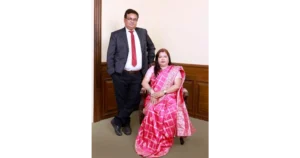
His association with Dr Renu Pandey brought both personal and professional strength. Their partnership added balance to the growing responsibilities. While Dr Ashok Kumar Pandey focused on expansion and administration, she remained closely involved in academics and operations, creating a steady rhythm that kept the work moving forward.
The turning point came when his institutions started gaining recognition for discipline, consistent academic results, and a structured learning environment. Students from different backgrounds began enrolling, and trust grew steadily among parents. Over time, this trust became the biggest asset. It was not built overnight; it came from years of showing up and staying consistent.
He often believed that education should not just be about degrees but about shaping individuals. He believed that education is about shaping thinking, not just classroom learning. That belief can be seen in the way his schools focus on both academic and personal development. His work did not remain limited to formal education; he also explored fields like astrology, naturopathy, and social awareness initiatives. This added another dimension to his personality, making him more than just an educationist. His involvement in media and social organizations further widened his reach, connecting him with broader communities.
Recognition followed, though never chased actively. Awards such as best college recognition in Chhattisgarh, excellence in education awards, and national level honors came his way over the years. Yet his focus stayed rooted in daily work rather than public celebration. The institutions he built continued to grow, covering areas like technical education, school education, and skill based learning.
His leadership style leaned more toward discipline and consistency than showmanship. Staff members often described Dr Ashok Kumar Pandey as someone who preferred clarity over speed. Decisions were taken with patience, even if it meant slower expansion. This approach helped maintain stability, especially during challenging phases.
There were challenges that tested him deeply, including financial constraints in the early phase and skepticism from those around him. Still, he managed to move through these phases without losing direction. He believed that setbacks were part of the journey, not something to be avoided entirely.
In later years, his involvement in social causes became more visible. From supporting awareness campaigns to contributing to community based work, he extended his efforts beyond education. His association with media organizations also added a layer of public engagement, where he contributed to discussions around education and society.
Dr. Pandey believed that work speaks louder than plans, a sentiment that quietly sums up his path. There was never too much noise around his work, just steady progress. Today, Dr Ashok Kumar Pandey is seen as a respected figure in the Indian education sector, especially in central India. His journey reflects what consistent effort can do over time. Not every step was perfect, and not every decision brought immediate results. Still, the direction remained steady. From a small beginning in Bilaspur to building recognized educational spaces, his story continues to unfold at its own pace, grounded in belief, effort, and a long term view of education in India.