

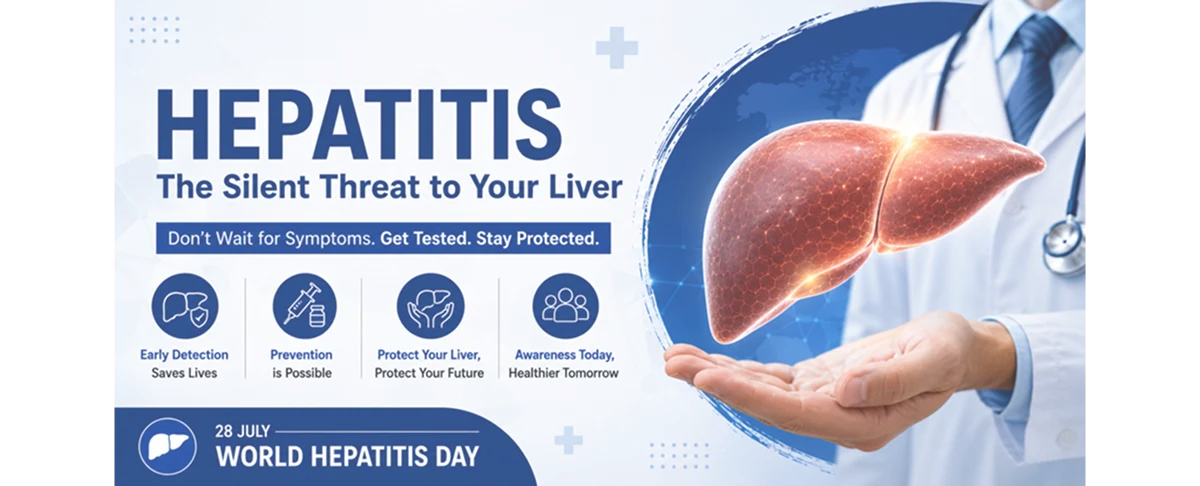
Hepatitis: The Silent Liver Disease That Often Goes Undetected Until It’s Too Late

Dr Ritu Thapliyal
Senior Consultant
Internal Medicine, Delhi
Millions of people are living with hepatitis without knowing it. Could you be one of them?
The liver is one of the hardest-working organs in the human body. It filters toxins, helps digest food, stores nutrients, and supports hundreds of essential body functions. Yet, despite its importance, liver health is often ignored until serious damage has already occurred.
One of the biggest threats to liver health is hepatitis—a disease that frequently develops without obvious warning signs. In many cases, people continue their normal lives for years without realizing their liver is silently being damaged. By the time symptoms become noticeable, irreversible complications such as liver cirrhosis, liver failure, or even liver cancer may have already developed.
This is why healthcare experts often refer to hepatitis as a “silent epidemic.”
What Exactly is Hepatitis?
Hepatitis simply means inflammation of the liver. While excessive alcohol consumption, certain medications, autoimmune disorders, and fatty liver disease can also cause hepatitis, the most common cause worldwide is viral infection.
There are five major types of viral hepatitis:
- Hepatitis A
- Hepatitis B
- Hepatitis C
- Hepatitis D
- Hepatitis E
Among these, Hepatitis B and Hepatitis C are responsible for the majority of chronic liver disease and liver cancer cases globally because they can remain in the body for many years without causing symptoms.
Why is Hepatitis Called a Silent Disease?
Unlike many illnesses, hepatitis often does not produce noticeable symptoms in its early stages.
Many patients feel completely healthy while the virus continues damaging the liver.
When symptoms finally appear, they may include:
- Persistent fatigue
- Loss of appetite
- Nausea or vomiting
- Dark-colored urine
- Yellowing of the eyes and skin (jaundice)
- Pain or heaviness in the upper right abdomen
- Unexplained weight loss
Unfortunately, these symptoms often develop only after significant liver injury has already occurred.
How Does Hepatitis Spread?
The mode of transmission depends on the type of hepatitis.
- Hepatitis A and E spread through contaminated food and water.
- Hepatitis B spreads through infected blood, unprotected sexual contact, contaminated needles, and from mother to baby during childbirth.
- Hepatitis C mainly spreads through infected blood, unsafe injections, or improperly sterilized medical equipment.
Understanding these routes is the first step toward prevention.
Can Hepatitis Be Prevented?
Yes. Many forms of hepatitis are preventable.
You can lower your risk by:
- Getting vaccinated against Hepatitis A and Hepatitis B.
- Using only sterile needles and medical equipment.
- Practicing safe food and water hygiene.
- Avoiding the sharing of razors, toothbrushes, and needles.
- Following safe sexual practices.
- Undergoing regular health check-ups if you belong to a high-risk group.
Early diagnosis and timely treatment can prevent most hepatitis-related complications and significantly improve quality of life.
World Hepatitis Day
Every year on 28th July, the world observes World Hepatitis Day to remind people that hepatitis is preventable, treatable, and, in many cases, curable when detected early.
The day is dedicated to increasing public awareness, promoting vaccination, encouraging early screening, and ensuring that more people receive timely treatment before irreversible liver damage occurs.
This year’s message is simple yet powerful: Don’t wait for symptoms. Know your status. Protect your liver.
Because when it comes to hepatitis, early awareness doesn’t just protect the liver—it saves lives.

